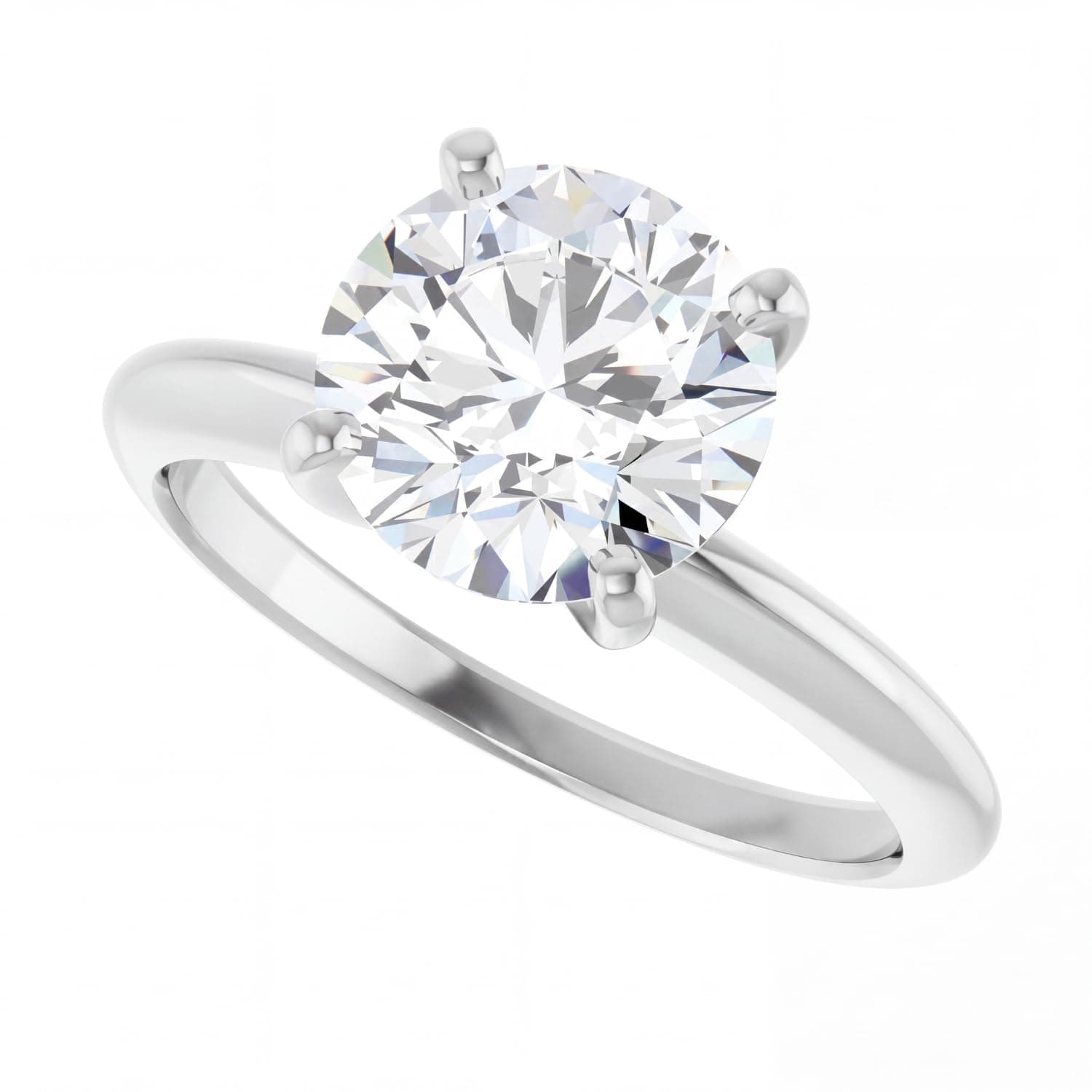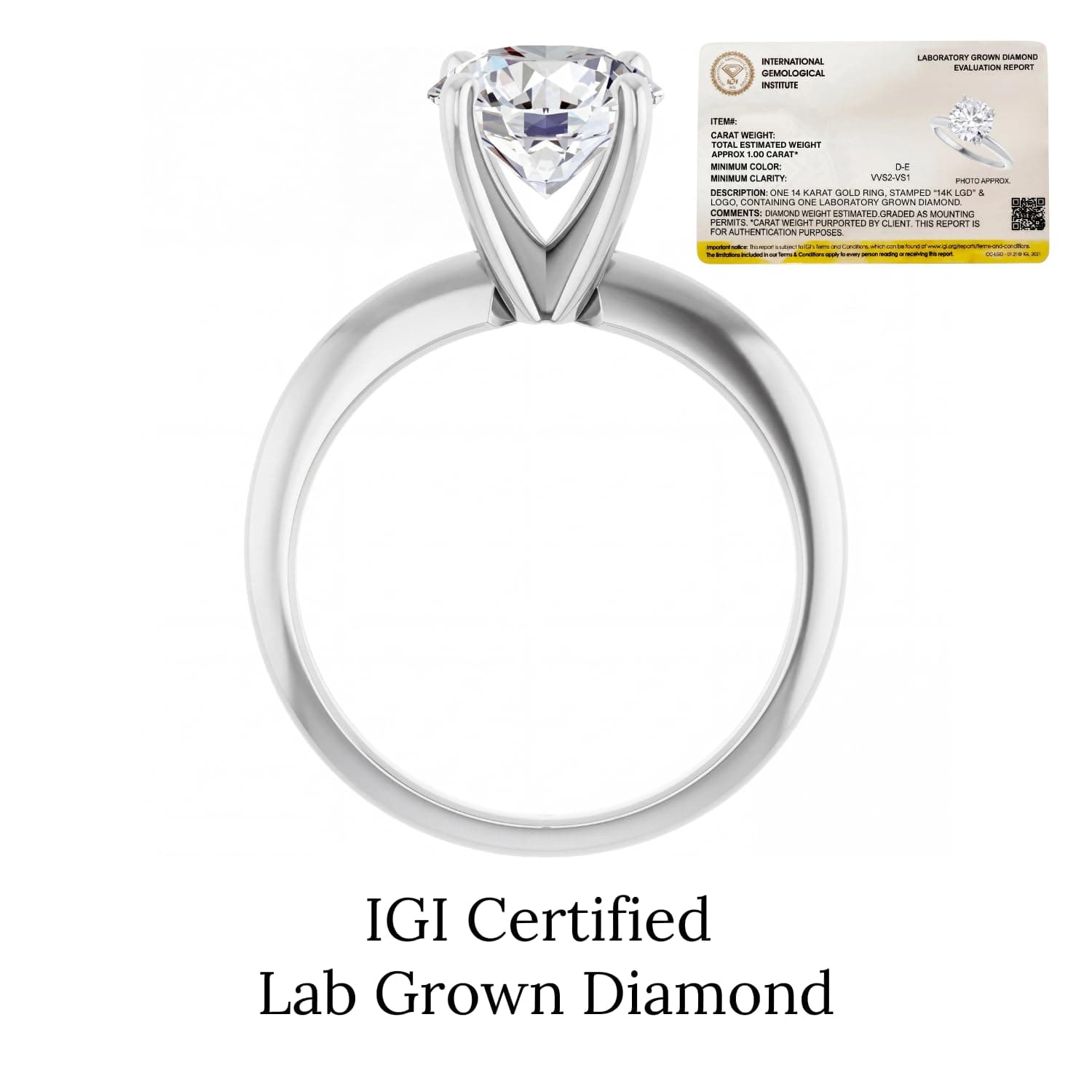
Ask most people to picture a diamond ring and they picture the stone. But a diamond never sits alone — it is held, lifted, framed, or wrapped by the metal around it, and that metalwork, the setting, is what gives the ring its character. The same stone can read heirloom-classic in one setting and cleanly modern in another. The way a diamond is set can completely change the vibe of a ring; it is where the whole design begins.
Whether you are drawn to something timeless or something sleek, the decision starts here, before size or shape. This guide walks through the settings you are most likely to meet, what each one does for the stone, and how to read a setting toward the mood you want.
What a setting actually is
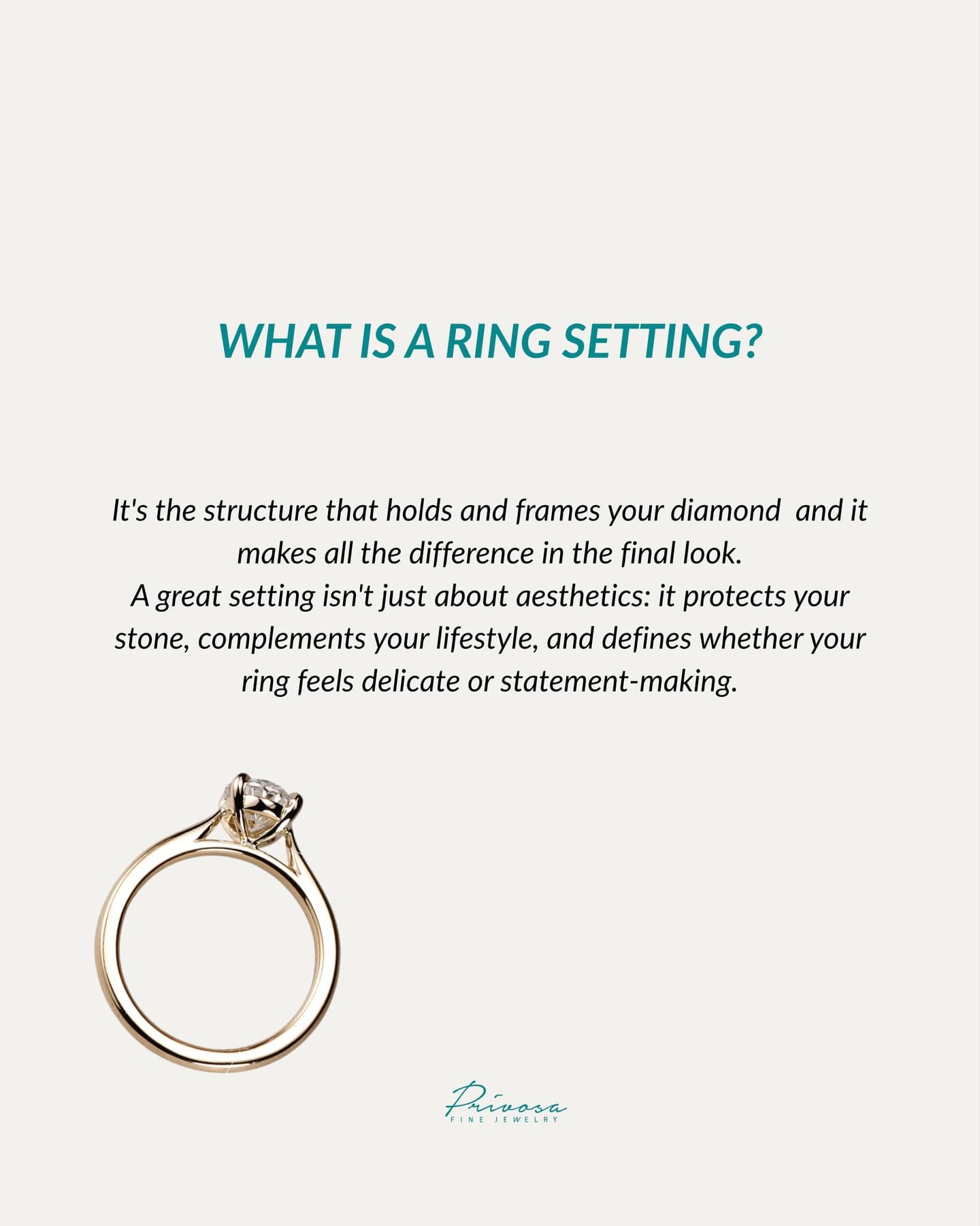
A setting is simply the arrangement of metal that secures the diamond to the band and presents it to the eye. It does two jobs at once. First, it holds the stone — safely enough to survive daily life, but without covering so much of it that the light is lost. Second, it sets the tone: how high the diamond sits, how much of its edge you see, whether the design steps back to let the stone speak or adds sparkle of its own around it.
Because the setting decides how light enters and leaves the diamond, it has a real effect on how bright the stone looks — not only on how it feels stylistically. A setting that leaves the sides of the stone open lets light in from more angles; one that wraps the stone trades a little of that brilliance for protection. Neither is better. They suit different stones, different hands, and different lives.
The settings you will meet most often
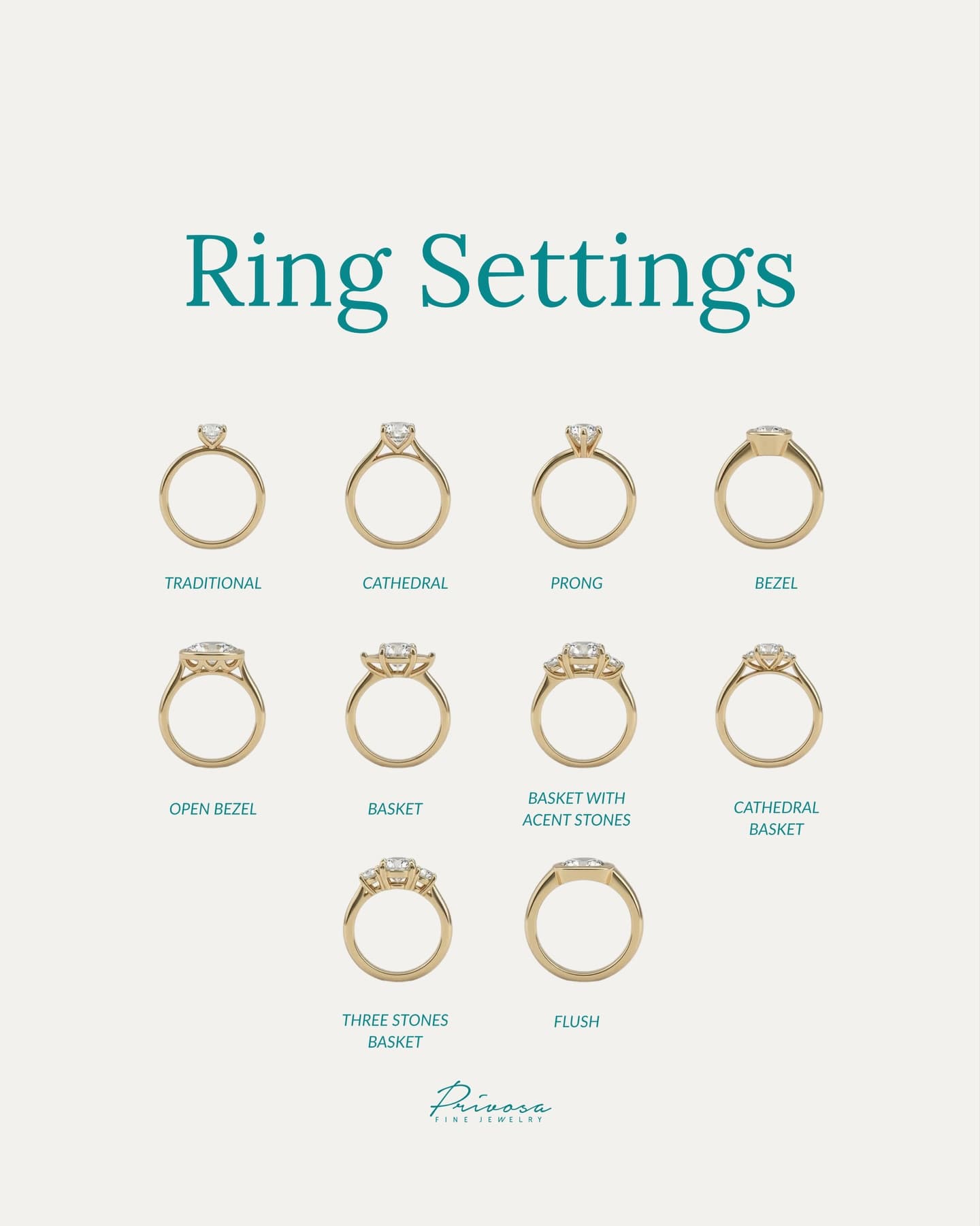
A handful of settings account for most rings. Knowing what each one does makes it far easier to recognize why two rings with similar diamonds can feel so different.
Common diamond ring settings
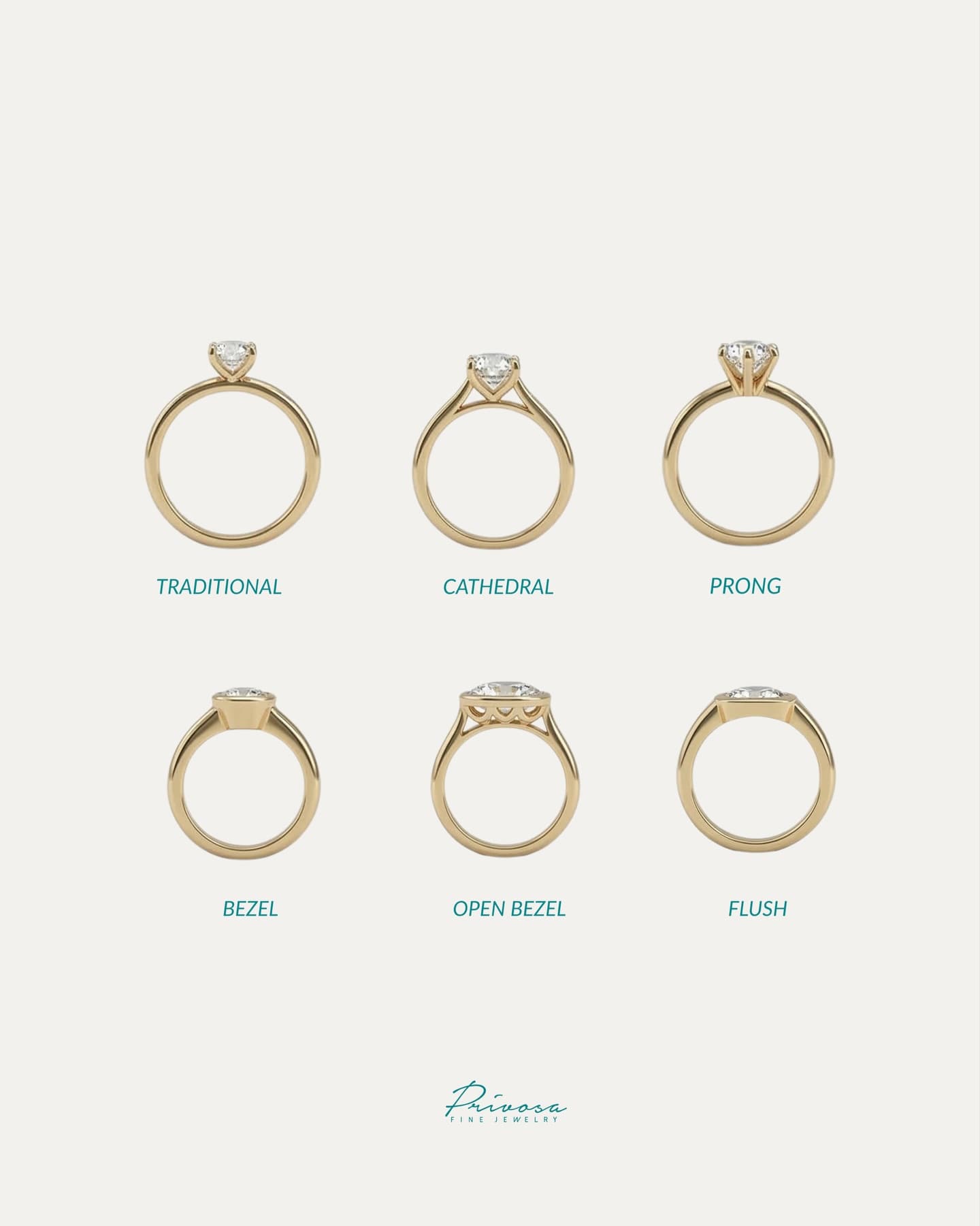
- Prong (solitaire)
- Slender claws — usually four or six — grip the stone and lift it clear of the band. Light enters from every side, so brilliance is at its highest. The enduring classic.
- Halo
- A ring of small pave diamonds encircles the center stone, making it look larger and adding sparkle at the edges. Romantic and full, with a vintage lean.
- Bezel
- A rim of metal wraps the girdle of the stone completely or partway around. The most protective and snag-free option, and the most modern in feel.
- Pave
- Tiny diamonds set close along the band so the metal all but disappears beneath them. Adds sparkle to the shank and frames the center stone with light.
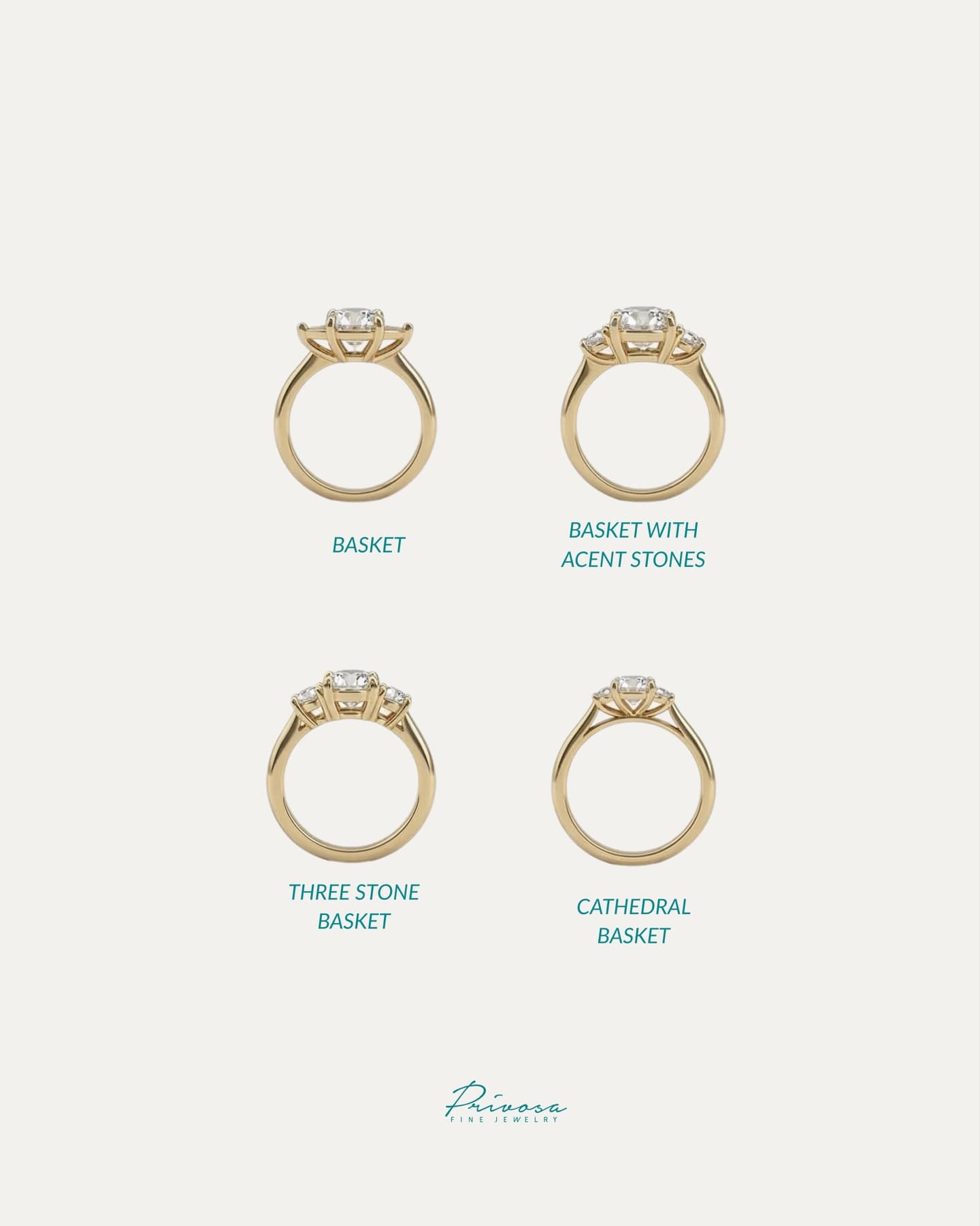
- Three-stone
- A center diamond flanked by two smaller stones. Balanced and traditional, and often read as marking past, present, and future.
- Cathedral
- Arches of metal rise from the band to cradle the stone aloft, like the vaults of a cathedral. Graceful and architectural, with extra height.
Other settings exist — tension, where the stone appears suspended between the two ends of the band, and channel, where small stones sit flush between two walls of metal — but the six above are the ones most decisions come down to.
Classic or modern: choosing a direction
The clearest way to narrow the field is to decide, first, on a mood. Are you drawn to something classic and timeless, or something sleek and modern? Most settings lean one way or the other, and knowing which helps the rest of the choices fall into place.
- Classic and timeless: a prong-set solitaire, a three-stone, or a cathedral. These designs have looked right for a century and will look right in another one. They put the diamond forward and let its cut do the talking.
- Sleek and modern: a bezel set low to the hand, or a tension setting. Cleaner lines, less metal on show, and a stone that sits close and secure rather than lifted high.
- Romantic and full: a halo or a pave band, where small stones gather light around the center and make the whole ring read brighter and larger.
- Quiet and practical: a low bezel or a low four-prong basket, chosen by people who want a ring that never snags a sweater and rarely needs a second thought.
A useful test is to look at what the wearer already owns. Someone whose jewelry is spare and geometric will usually be happiest in a bezel or a plain solitaire; someone who loves detail and sparkle tends toward a halo or pave. The ring should belong to the hand it lives on.
How a setting lives with you day to day
Style is only half the decision. A ring is worn through washing up, typing, gardening, and sleep, and the setting is what determines how gracefully it takes all of that.
- Height. A high setting shows the stone off and lets light underneath it, but it catches on clothing and knocks against surfaces more often. A low setting sits out of the way and feels more secure for active hands.
- Protection. A bezel shields the vulnerable edge of the stone almost entirely; prongs leave it more exposed, which is the trade for that extra brilliance. Prongs should be checked periodically, as they can loosen with years of wear.
- Cleaning. Open settings like prongs and cathedrals rinse clean easily. Pave and halo designs have more small crevices where lotion and dust collect, so they reward a gentle brush now and then to keep them bright.
- The metal itself. Every Privosa setting is solid 14k gold — white, yellow, or rose — so the metal holding your diamond is the same all the way through, not a plated surface that wears away at the points that take the most handling.
The setting is where it all starts, and it is worth lingering over. Choose the mood first, then the setting that carries it, then the stone it will hold — and the ring that results will look like it could never have been put together any other way.
Frequently asked
Does the setting affect how sparkly a diamond looks?+
Yes. The setting decides how much light can reach the stone and leave it. Open settings such as prongs and cathedrals let light in from every side and tend to look brightest, while a bezel wraps the stone and trades a little of that brilliance for protection. A halo or pave setting adds sparkle of its own with small stones gathered around the center.
Which ring setting is the most secure for everyday wear?+
A bezel setting is generally the most secure and snag-free, because a rim of metal wraps and shields the edge of the stone. A low prong or basket setting is also very wearable. High settings show the diamond off but catch on clothing more and, in the case of prongs, should be checked periodically since they can loosen over years of wear.
What is the difference between a solitaire and a halo setting?+
A solitaire holds a single diamond in prongs with no other stones, so all the attention falls on that one stone — the timeless classic. A halo surrounds the center diamond with a ring of small pave stones, which makes the center look larger and adds sparkle at the edges for a fuller, more romantic look.