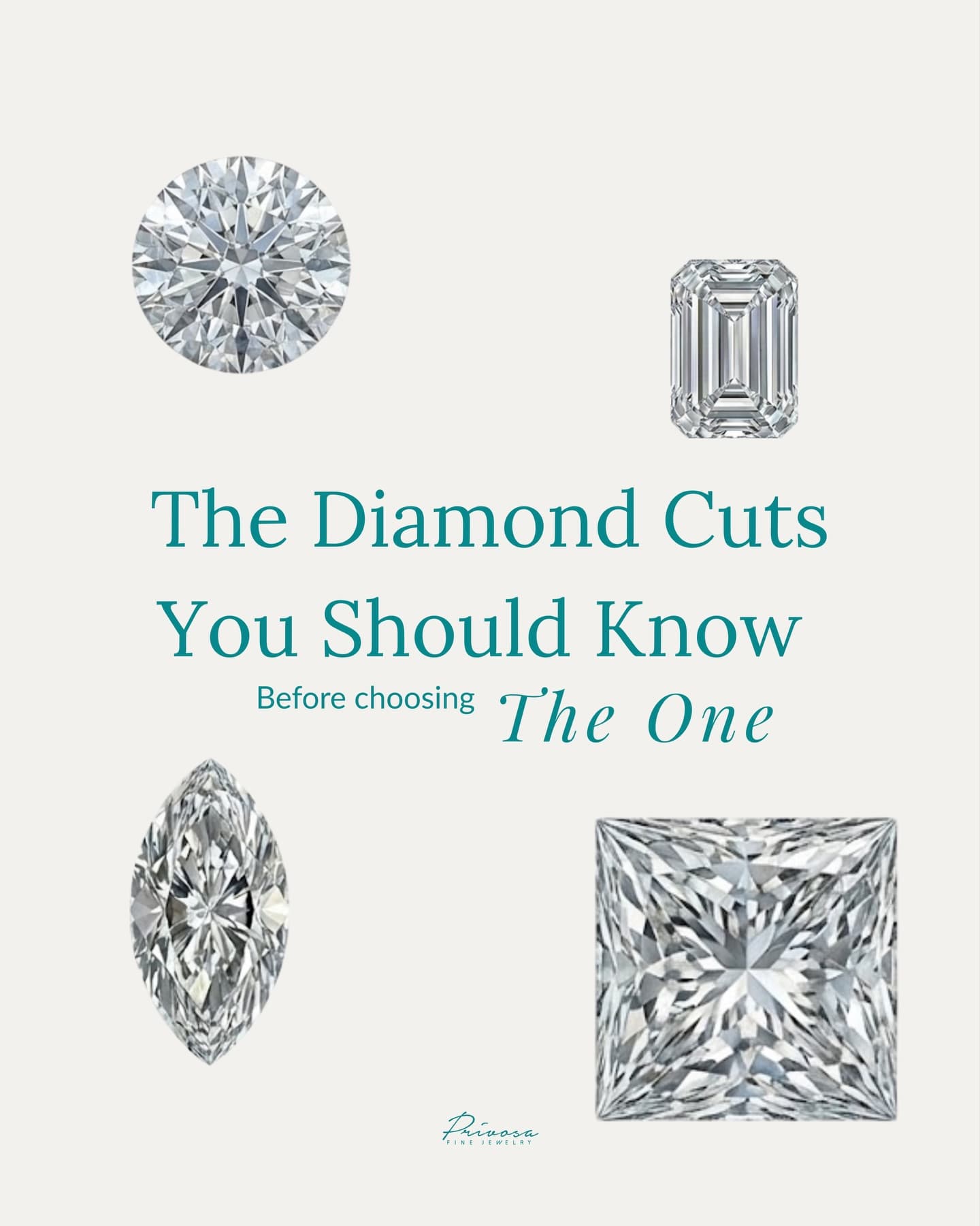
Not all diamonds are cut the same. Two stones of identical weight and quality can feel completely different in the hand simply because of their outline — one soft and rounded, another long and architectural. The shape you choose sets the tone for everything that follows, from the style of the setting to the presence the piece has on the finger.
It is worth slowing down over, because shape is the one decision you cannot quietly upgrade later. A diamond can be reset, repolished, or moved into a new mount, but its silhouette is fixed the moment it is cut. This guide explains the difference between a diamond's shape and its cut, walks through the shapes we set most often, and offers a few honest pointers for choosing the one that suits you.
Shape versus cut: two words, two meanings
The words are used loosely in conversation, but they mean different things. Shape is the outline of the finished stone seen from above — round, oval, emerald, cushion, and so on. Cut is a measure of workmanship: how precisely the facets are angled, proportioned, and polished to catch and return light. A round diamond is a shape; whether that round is cut to sparkle brilliantly or return light dully is a separate, graded quality.
This matters when you shop, because a beautifully shaped stone that is poorly cut will look lifeless, while a modest stone that is well cut will read bright and lively. Choose the shape you love first, then insist on a good cut within it. Of the 4Cs, cut is the one the eye notices most, and the one worth protecting in your budget.
A short field guide to diamond shapes
Every shape has a temperament. Some are built for maximum sparkle, some for a calm, mirror-like clarity, and some for the illusion of extra size. Here are the ones we work with most, and what each one tends to do.
The shapes, at a glance
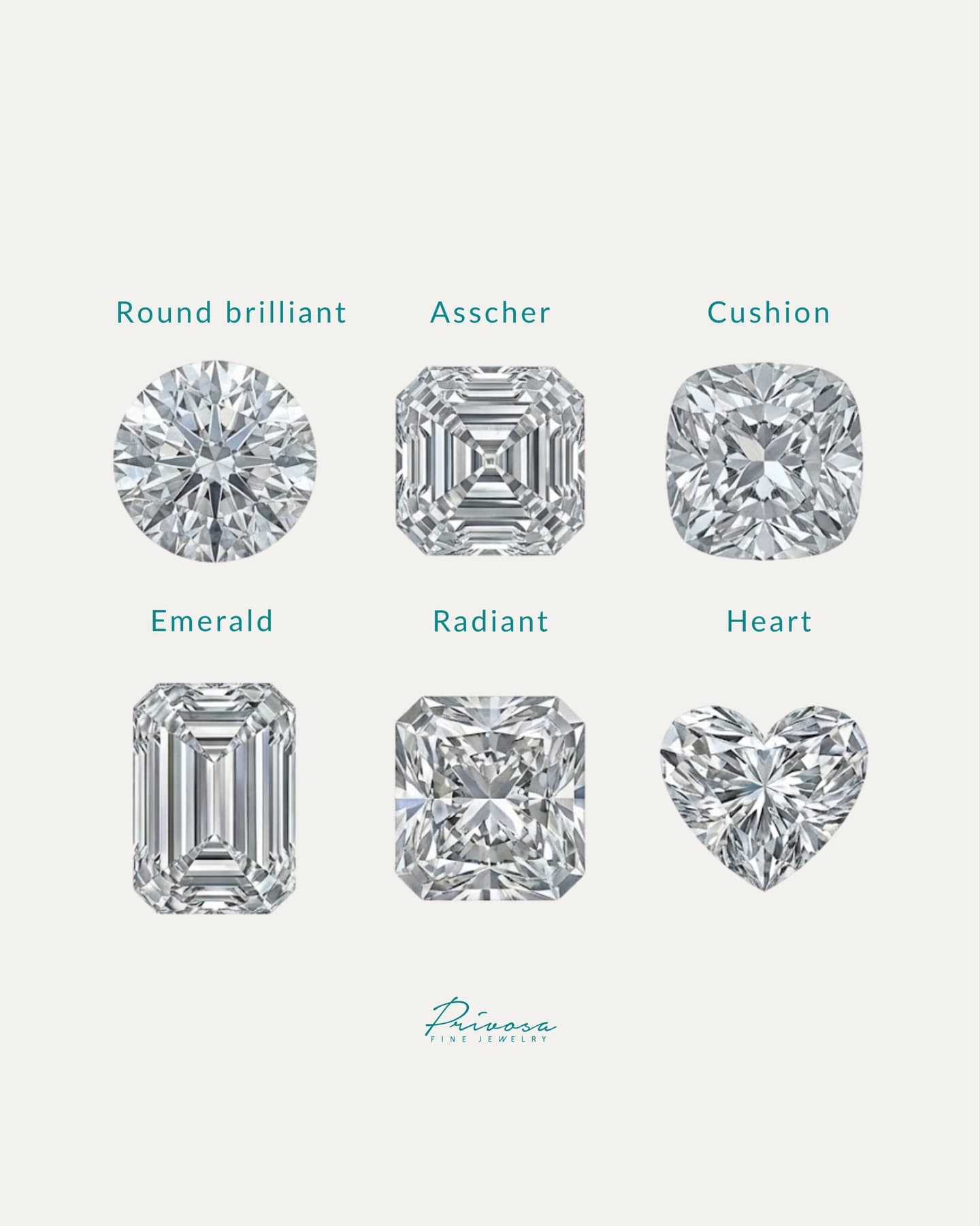
- Round brilliant
- The classic. Fifty-seven or fifty-eight facets engineered for maximum brilliance and fire. It hides faint color and small inclusions well and never dates, but it commands the highest price per carat.
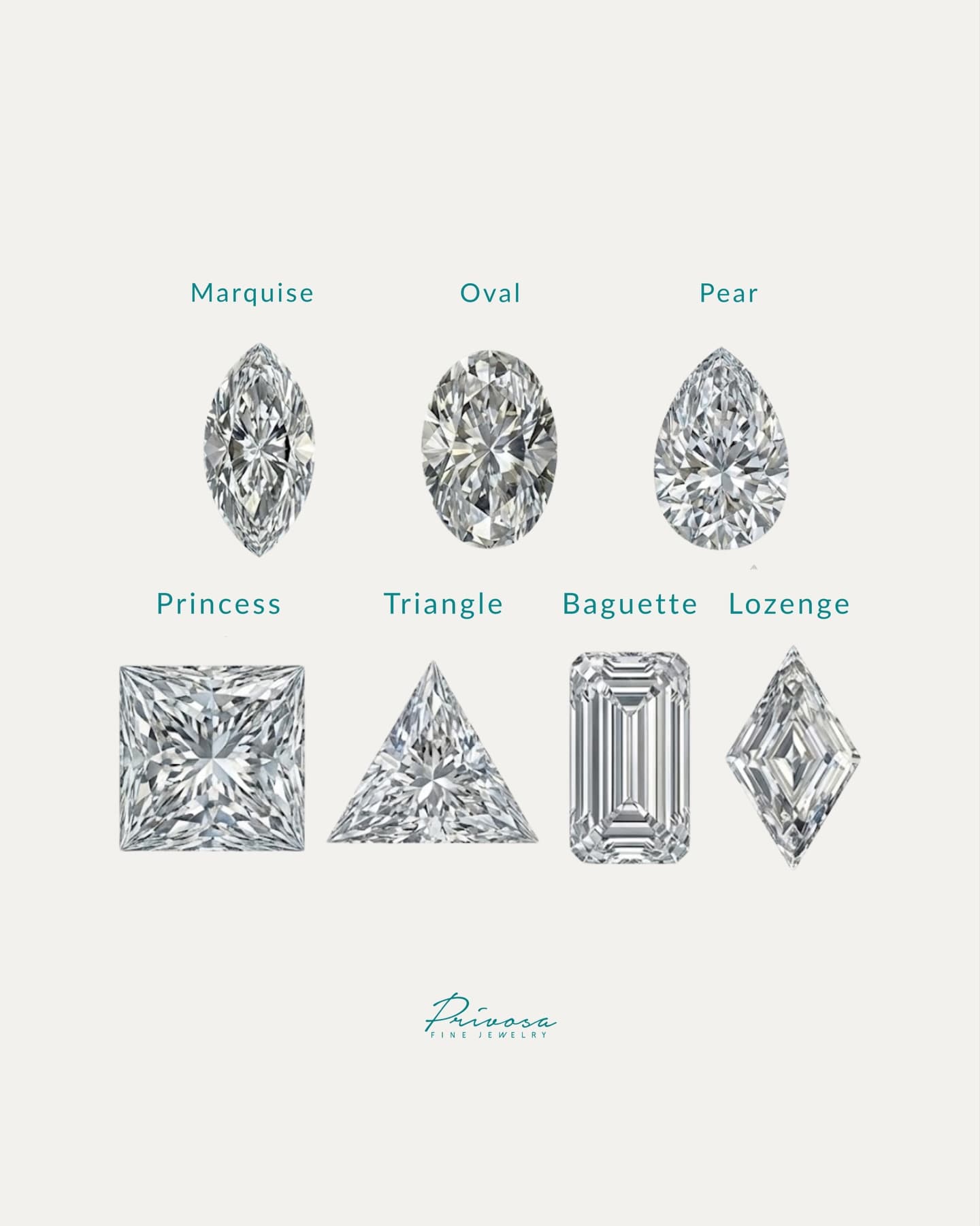
- Oval
- A brilliant-cut ellipse with the same lively sparkle as a round. Its length flatters and slims the finger and makes a stone look larger for its weight.
- Emerald
- A step cut with long, open facets that read like a hall of mirrors rather than a sparkle. Elegant and understated, it shows clarity plainly, so choose a cleaner stone.
- Cushion
- A softened square or rectangle with rounded corners and a warm, romantic, slightly vintage character. It holds fire beautifully.
- Princess
- A sharp-cornered square with brilliant faceting — modern, crisp, and full of sparkle. A popular alternative to the round.
- Radiant
- A cropped-corner rectangle that pairs an emerald's outline with a brilliant's sparkle. A good middle path if you like clean lines but want more life.
- Pear
- A teardrop that blends the round and the marquise. Worn with the point toward the hand, it elongates the finger and reads distinctly.
- Marquise
- An elongated shape with pointed ends that maximizes apparent size and casts a regal, lengthening line across the hand.
- Asscher
- A square step cut with concentric, art-deco geometry. Like the emerald, it rewards a higher clarity grade with a clean, architectural look.
- Heart
- A romantic, symmetrical silhouette that depends on good symmetry and skilled cutting to look right.
Choosing the shape that suits you
There is no single best shape, only the one that suits the hand it will live on and the person wearing it. A few practical notes to weigh as you decide.
- Start with the outline you are drawn to. Shape is the first thing anyone notices and the hardest to change, so trust your eye before you optimize the specifications.
- Match clarity to the cut style. Brilliant shapes — round, oval, cushion, pear — scatter light and forgive small inclusions. Step cuts such as emerald and Asscher are open and honest, so they ask for a higher clarity grade.
- Use elongation to your advantage. Oval, pear, marquise, and emerald shapes spread across the finger, lengthen it, and often look larger than a round of the same carat weight.
- Consider daily life. Pointed shapes — pear, marquise, heart — have tips that benefit from a protective prong or bezel and a little care around knits and pockets.
- Let the metal and setting follow the shape. The silhouette should lead the design; the mount is there to hold and flatter it, not to compete.
If you have already chosen The One, the rest is detail. If you are still deciding, seeing the shapes in person — the way each one throws light and sits on a hand — is the surest way to know which is yours.
Frequently asked
What is the difference between a diamond's cut and its shape?+
Shape is the outline of the stone — round, oval, emerald, and so on. Cut refers to how well the facets are proportioned, angled, and finished to return light. A round diamond is a shape; the quality of its cut is graded separately and is what makes it sparkle.
Which diamond shape looks the largest?+
For a given carat weight, elongated shapes such as oval, marquise, pear, and emerald spread more across the finger and tend to read larger than a round or square stone of the same weight. Round brilliants carry more of their weight in depth.
Which diamond shape sparkles the most?+
Brilliant-cut shapes return the most light. The round brilliant is engineered for maximum sparkle, with oval, cushion, and pear close behind. Step cuts such as emerald and Asscher trade sparkle for a clearer, more architectural look.