
A diamond pendant is one of the few pieces of jewelry that reads as both effortless and deliberate. You clasp it once in the morning and forget it is there, yet it quietly finishes everything you wear. Our Sadie Lab Grown Diamond Pendant Necklace, a halo pendant set in 14K white gold, was made for exactly that role: the piece you reach for on an ordinary Tuesday and still feel dressed up in.
Behind that ease are a few decisions worth understanding, because they are the ones that make a pendant look bright and wear comfortably for years. There are three: the halo setting, the choice of a lab-grown diamond, and the length of the chain. Here is what each one does.
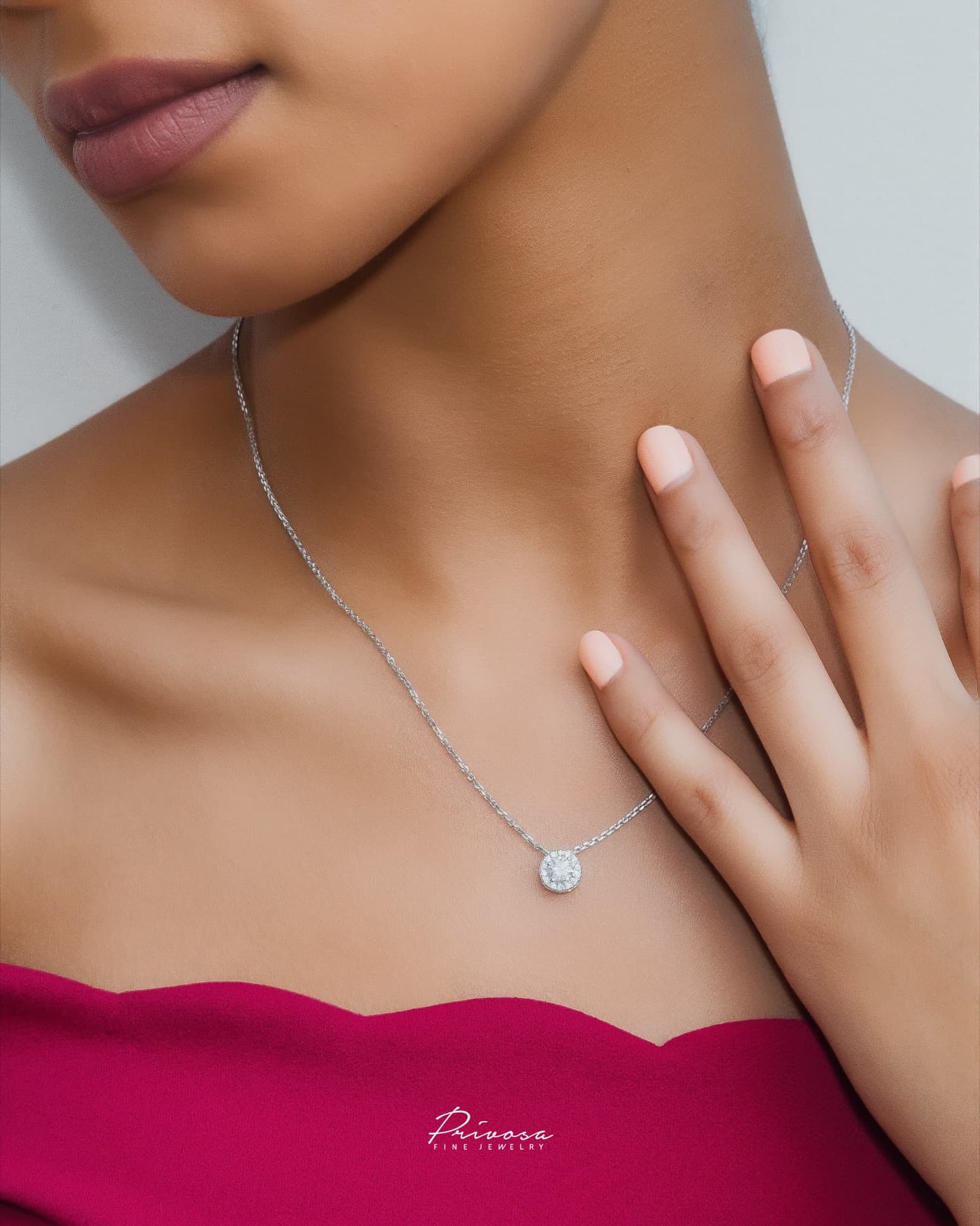
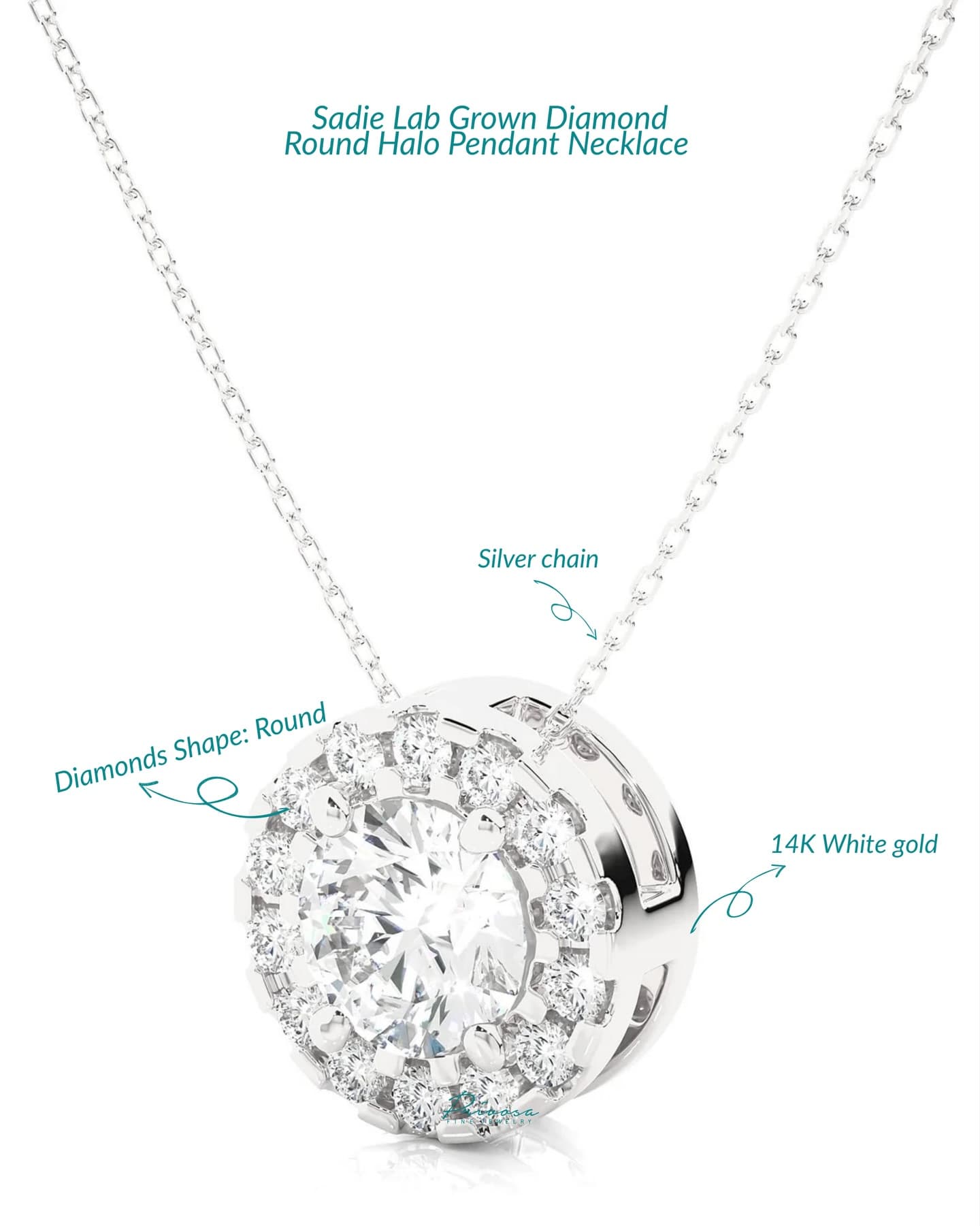
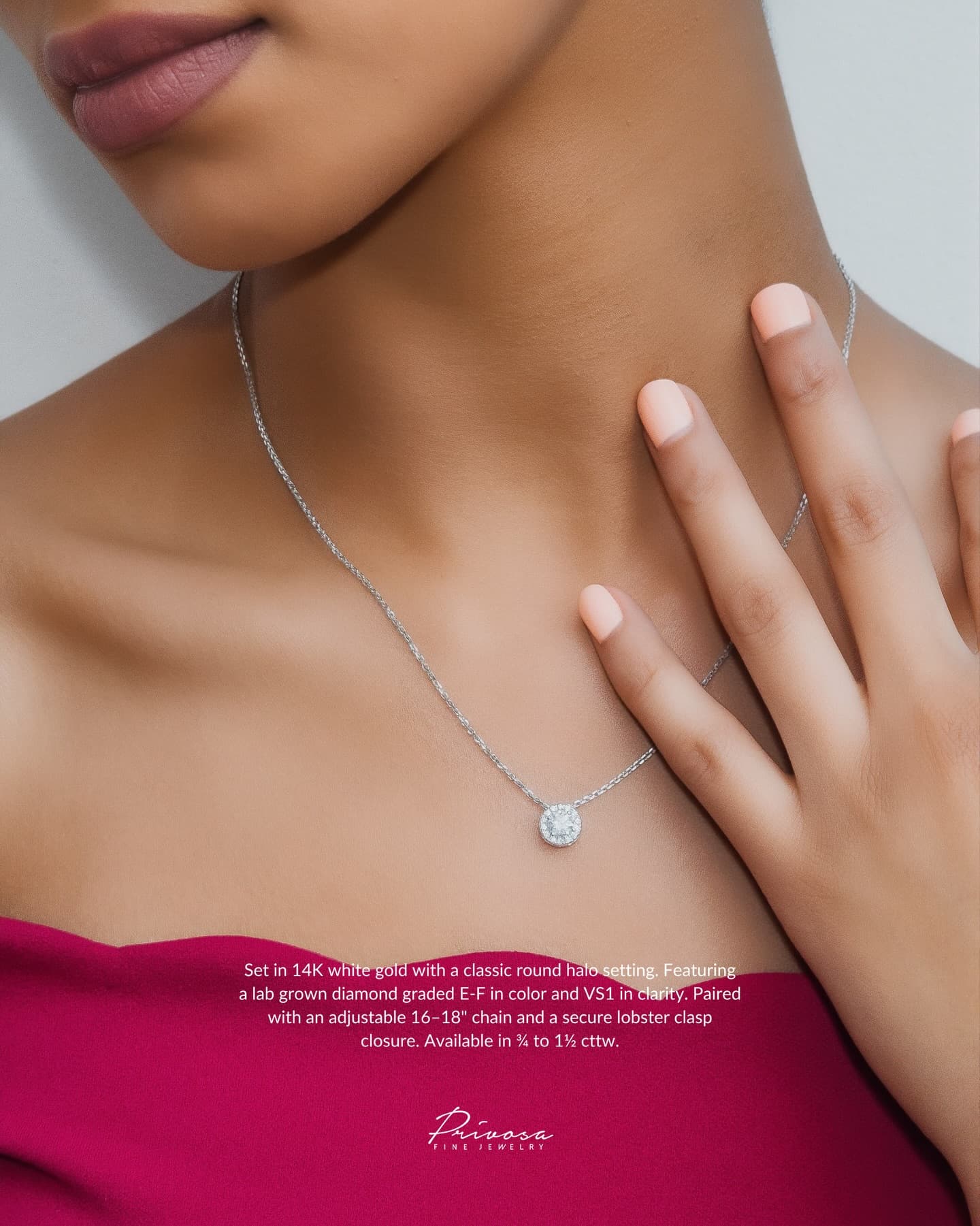
The halo, explained
A halo is a ring of small diamonds set closely around a larger center stone. It is one of the oldest ideas in jewelry design, and it earns its place because it does three things at once.
- Makes the center stone look larger. The unbroken border of diamonds extends the center's visual footprint, so a modest stone reads a size or two bigger than it measures.
- Adds brightness. More facets packed into a small area means more light returned to the eye, which is why a halo pendant catches light from across a room.
- Protects the center stone. The raised metal and surrounding diamonds shield the girdle, the thin edge of the center stone, from everyday knocks.
That combination of size, sparkle, and protection is why the halo has stayed in fashion for more than a century. It is flattering, forgiving, and it makes the most of every carat.
Lab-grown diamonds, graded like any other
A lab-grown diamond is a real diamond. It is pure crystallized carbon with the same hardness, brilliance, and fire as a diamond formed in the earth. The only difference is where it began: grown in a controlled environment over a matter of weeks rather than beneath the ground over eons.
Because they are chemically and optically identical to mined diamonds, lab-grown stones are described and graded on exactly the same four qualities, known as the 4Cs.
- Cut
- How well the diamond's facets return light. The single biggest driver of sparkle, and the one you notice first.
- Color
- How close to colorless the stone is, graded from D (colorless) down to Z (a faint yellow).
- Clarity
- The presence of tiny natural inclusions, graded from Flawless to Included. Many are invisible without magnification.
- Carat
- The stone's weight, and a rough proxy for its size.
The takeaway is simple: a lab-grown diamond is held to the same standard as any other, so you can read its grades the same way and choose it with confidence. For a pendant that sits close to the light all day, cut is the quality that rewards you most.
A word on 14K white gold
White gold is a gold alloy: pure gold blended with white metals and finished with a thin plating of rhodium, which gives it that bright, cool shine. At 14 karat it is 58.5 percent gold, hard enough to stand up to daily wear while keeping the warm, precious weight of solid gold.
Its neutral tone is what makes it such a natural partner for diamonds. Where yellow gold can lend a warm cast to a stone, white gold lets the diamond's own color read true, so a near-colorless halo looks as bright as it is.
Choosing a pendant for every day
An everyday pendant lives a different life than a piece kept for occasions. It goes under sweaters, through seatbelts, and past reaching hands. A few details are what make one comfortable enough to never take off.
- A secure bail and clasp. The loop that holds the pendant, called the bail, and the clasp should feel solid; a spring-ring or lobster clasp is dependable for daily wear.
- The right chain weight. Too fine and it tangles or snaps; too heavy and it overwhelms a small pendant. A cable or box chain tends to strike the balance.
- A length that layers. Most everyday pendants sit best between 16 and 18 inches, at or just below the collarbone.
- Collar (12–13")
- Sits high on the neck. Dramatic, and best shown over an open neckline.
- Choker (14–16")
- Rests at the base of the throat.
- Princess (17–19")
- Falls just below the collarbone. The most versatile length for an everyday pendant.
- Matinee (20–24")
- Sits toward the top of the bust and layers well over knits.
For a halo pendant like the Sadie, a princess-length chain that matches the pendant's white gold keeps the metal consistent and lets the diamond sit right where the eye naturally lands.
Frequently asked
Are lab-grown diamonds real diamonds?+
Yes. A lab-grown diamond is pure crystallized carbon with the same hardness, brilliance, and fire as a mined diamond, and it is graded on the same 4Cs. The only difference is that it was grown in a controlled environment rather than beneath the earth.
Does a halo setting make the center diamond look bigger?+
It does. The ring of small diamonds encircling the center stone extends its visual footprint and adds sparkle, so the center reads noticeably larger and brighter than it measures on its own.
What chain length works best for an everyday pendant?+
For most people, 16 to 18 inches, roughly princess length, sits at or just below the collarbone. It flatters most necklines and layers easily with shorter or longer chains.